
Small Business Lead Generation — Get Real Leads That Convert
Strategies, Examples, and Growth Secrets
How to Build a Predictable Pipeline
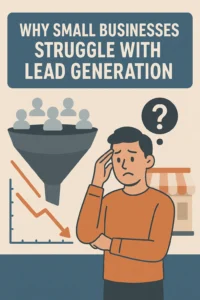
Table of Contents
Introduction: Why Small Businesses Struggle with Lead Generation
Ravi runs a mid-sized trading business in Gurugram. Every month, he spends money on ads — sometimes on Google, sometimes on Facebook. He gets inquiries. His sales team writes them in an Excel sheet. And then… silence.
By the time his staff calls back, the prospect has already moved on. Sometimes they never answer. Sometimes they say, “We already spoke to another company.” Ravi feels like he’s throwing money into a black hole.
The problem isn’t unique to Ravi. Across India — from family-run clinics to IT startups to real estate consultants — business owners share the same frustration: “We’re generating leads, but they don’t convert.”
The truth? Most of them aren’t generating leads at all. They’re just collecting names and numbers without a system. And without a system, opportunities die before they ever reach sales its total failure of marketing efforts, which need a audit of the efforts they are putting in marketing.
Lead generation isn’t just about collecting phone numbers or emails. It’s about understanding the customer’s journey, building awareness, earning trust, and moving prospects step by step down the funnel until they are ready to buy. Done right, it creates a predictable pipeline of new opportunities. Done wrong, it drains budgets and leaves business owners exhausted.
This guide focuses exclusively on the first two stages of the funnel—Awareness and Consideration—also known as TOFU (Top of Funnel) and MOFU (Middle of Funnel). We’ll dive deep into strategies, mistakes to avoid, platform comparisons, and best practices that deliver real results for small businesses. We’ll cover Conversion and Retention (BOFU and post-purchase) in the next blog..
Why Leads Slip Through the Cracks
Imagine this: a customer searches for “business consultant near me.” They click on your Google Ad. They fill in their name and number. Now, they wait.
If they don’t hear from you within a few minutes, what happens? They click the next ad. They find someone else who replies immediately.
Research proves this. Harvard Business Review discovered that responding to a lead within 5 minutes makes you 100 times more likely to connect compared to waiting 30 minutes. But most small businesses respond after hours — or days.
Speed is just one issue. Leads also leak because:
The wrong audience is targeted. Businesses try to sell to everyone instead of focusing on qualified prospects.
Marketing is scattered. Google My Business, Facebook, Instagram, SEO, and WhatsApp all run in isolation, with no unified system.
Follow-up is manual. If the sales rep forgets, the lead is gone.
Trust is missing. Prospects don’t know if you’re genuine, so they hesitate.
When these problems combine, ad spend becomes wasteful, staff feel helpless, and owners blame the platform. But the platform isn’t the enemy. The lack of a structured lead generation process is.
What Lead Generation Really Means
Too often, people think lead generation is about numbers: “We got 200 leads from Facebook this month.” But here’s the harsh reality — 200 leads in an Excel sheet mean nothing if none of them convert.
True lead generation is about attracting the right people, building trust, and nurturing them into opportunities. It’s not about the volume of names. It’s about the quality of conversations.
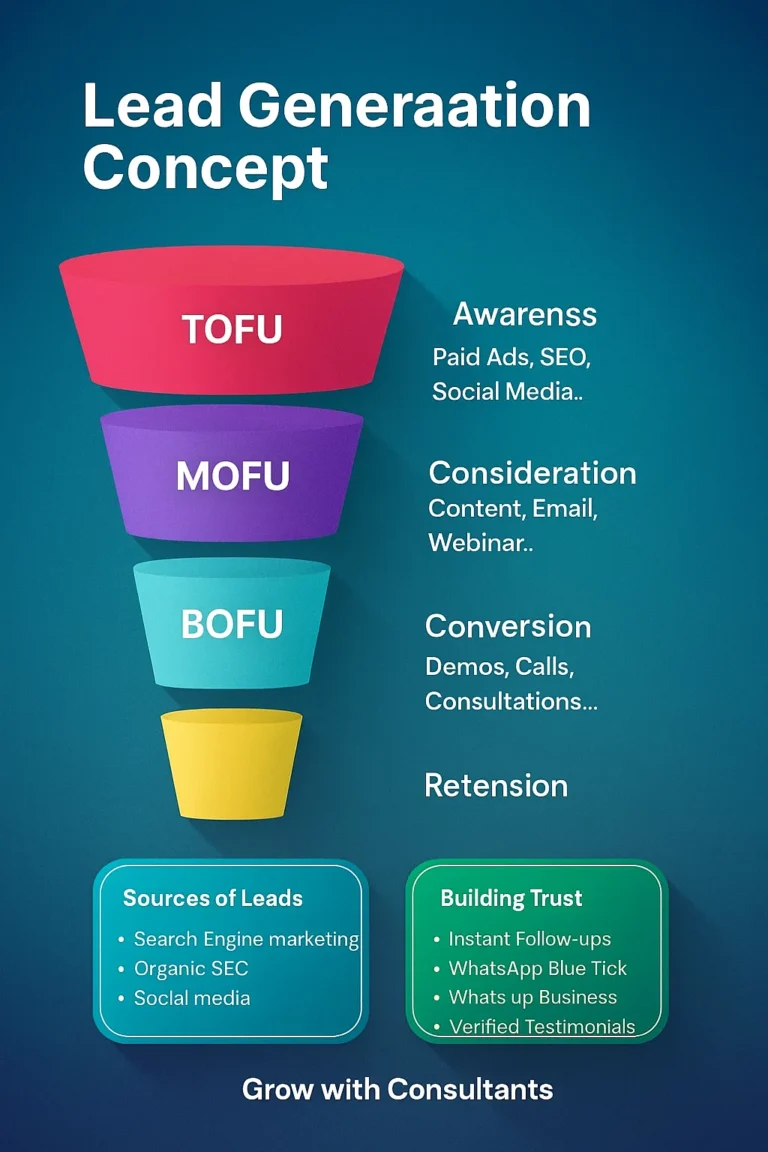
Understanding the Funnel: Awarness(TOFU),Consideration(MOFU)
The customer journey can be visualized as a funnel with four main stages:
Awareness (TOFU):
The widest part of the funnel. Here, your goal is to grab attention, educate, and let potential customers know you exist.
Consideration (MOFU)
At this stage, prospects are evaluating options, comparing solutions, and consuming content that answers their questions.
Conversion (BOFU):
This is where prospects make a buying decision. Offers, consultations, free trials, and strong CTAs drive them to purchase.
Retention:
Post-purchase engagement to turn one-time buyers into repeat customers and brand advocates.
This guide will focus exclusively on Awareness and Consideration (TOFU and MOFU)—the foundation of lead generation. We’ll save Conversion and Retention for a dedicated next blog.
Awareness:(TOFU ) Strategies for Lead Generation
At the top of the funnel, the job is simple: get noticed. If your business isn’t visible, no one can consider you. But visibility doesn’t mean shouting everywhere. It means showing up in the right place at the right time.
Few ways to show your business presence:
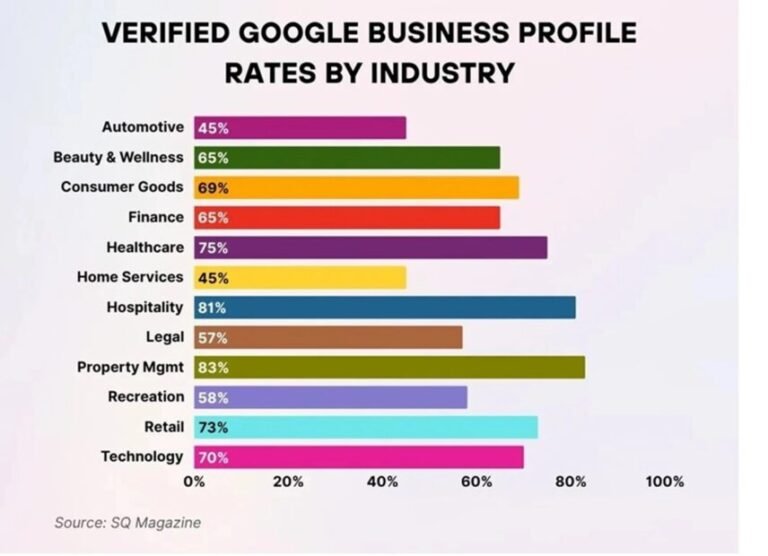
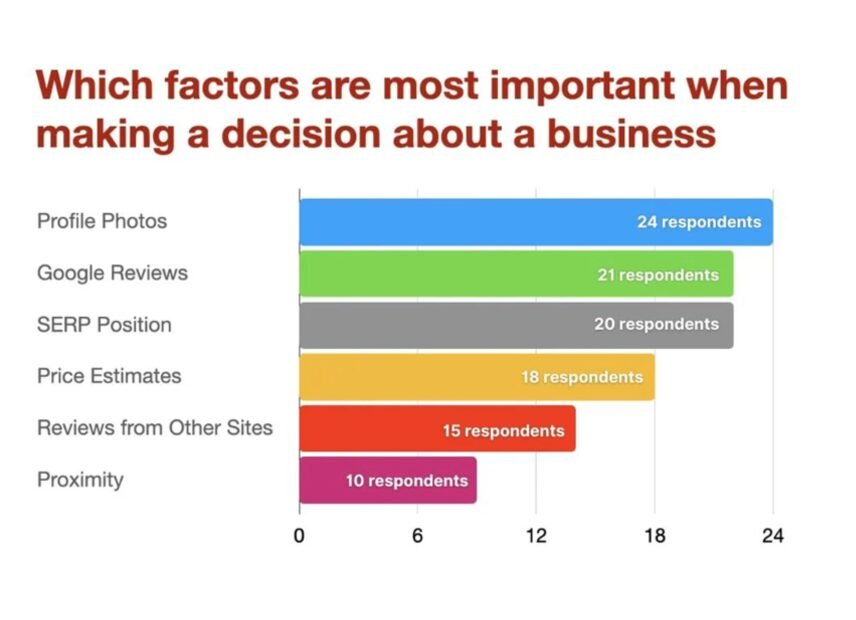
Google My Business (GMB)
Think about it: when someone searches “Best Business Consultant” or “best Business Growth consultant in Gurgaon,” what shows up first? It’s not ads. It’s the Google My Business listings.
An optimized GMB profile is pure gold for small businesses. Reviews, photos, regular posts, and updated information don’t just attract clicks — they build credibility before you’ve even spoken to the customer.
Stat to note: 64% of consumers use Google My Business to find local businesses every year (BrightLocal). If your profile isn’t optimized, you’re invisible where it matters most.
Search Engine Marketing (SEM)
Google Ads remain one of the fastest ways to capture high-intent leads. When someone types “business consultant Gurgaon,” they’re not browsing for fun — they’re ready to engage. Targeting these searches can yield immediate inquiries.
But SEM alone is like renting a shop in a busy market. People will come in, but if your process isn’t tight, they’ll walk out as fast as they entered.
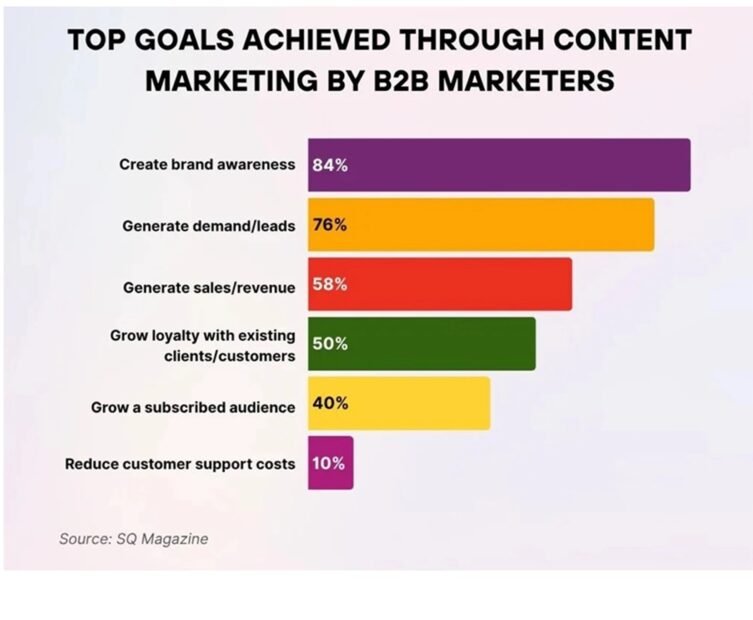
Content Marketing & SEO
While ads stop when budgets stop, SEO keeps giving. Blogs, optimized service pages, and location-based landing pages build a long-term pipeline. Companies with blogs generate 67% more monthly leads than those without (DemandMetric).
Think of SEO as the foundation. Paid ads can create spikes, but organic presence ensures a steady flow.
Social Media Ads (Facebook, Instagram, LinkedIn,)
Social Media Platforms plays an important role in generating leads.
Different platforms work for different goals:
Facebook & Instagram: Great for consumer-facing businesses (real estate, retail, lifestyle).
LinkedIn: Precise B2B targeting.
Shorts: High reach for awareness.
The key is integration. Ads must lead somewhere — ideally into a funnel that nurtures. And that’s where the next stage (MOFU) kicks in.
MOFU: From Awareness to Consideration
Here’s where most small businesses lose the game. A prospect has noticed you. They’ve clicked your ad, visited your site, or messaged you. But what happens next?
For many, the answer is… nothing.
Consideration is the bridge. This is where curiosity must turn into trust. And trust doesn’t happen with one ad. It happens through consistent, meaningful touchpoints.
Lead Magnets
Instead of asking for a sale immediately, offer value. It could be a free HR Bottleneck Evaluator, a short eBook on cost-saving strategies, or a free consultation call. This shifts the dynamic from “Sell to me” to “Help me.”
Automation with WhatsApp API
This is where small businesses can leapfrog. Manual follow-ups are slow and inconsistent. Automation tools like WAsimple,MBG Card, Wati etc change the game:
They integrate WhatsApp, Facebook, Instagram, and many other platforms into one system.
Every lead gets an instant, branded, verified response.
Drip campaigns nurture them with timely follow-ups.
- Can send thousands of messages without block theough Broadcasting feature. (Subject to approval)
Imagine the difference: One business takes a day to respond with a generic email. Another sends a verified WhatsApp message with the brand name within 30 seconds. Who would you trust more?
WhatsApp Engagement
Meta’s own data shows that click-to-WhatsApp ads convert 2–3x better than traditional landing pages. Why? Because WhatsApp is where people already are.
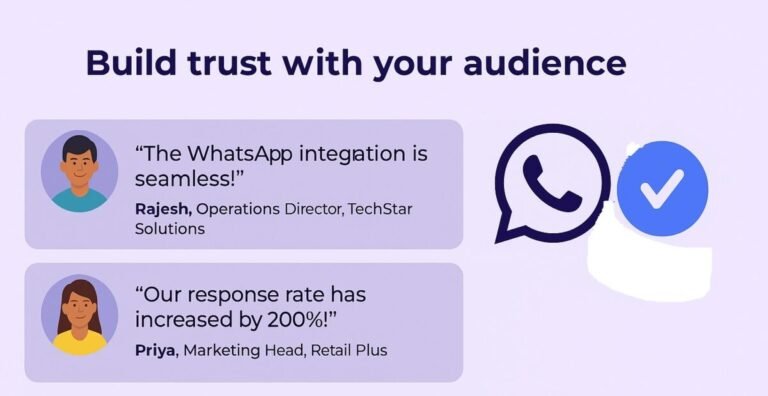
And when your account has the blue tick verification, response rates nearly double. It signals authenticity, removing the doubt that kills so many early-stage conversations.
A “WhatsApp verified business name” indicates a business that has completed Meta’s verification process for its WhatsApp Business account, marked by a blue checkmark badge. To obtain this, a business must use the WhatsApp Business API, be verified through Meta Business Manager, provide media links from reputable sources, and maintain accurate business details.
Social Proof & Case Studies
At the consideration stage, prospects want proof. Testimonials, before-and-after stories, and examples of other clients matter more than fancy ad creatives.
Remember: people don’t buy services, they buy confidence.
Building Trust with Prospects
Trust is the currency of lead generation. Without it, prospects won’t share their contact details or engage further. Here’s how small businesses can build it:
Social Proof: Share testimonials, case studies, and logos of clients.
Transparency: Be clear about what prospects will get when they sign up.
Recognition: Highlight partnerships (e.g., Razorpay, Google, GoDaddy) and media mentions.
Consistency: Maintain regular, high-quality engagement across all channels.
70%+ of Indians check WhatsApp multiple times daily. A verified WhatsApp Business account (blue tick) /Brand name dramatically increases response rates. When messages arrive with your brand name and verified status, customers treat them as authentic. Businesses using branded WhatsApp campaigns have reported 2x higher engagement compared to generic SMS or email outreach.
According to Nielsen, 92% of consumers trust referrals from people they know, and 70% trust online reviews. Your lead generation strategy must leverage this psychology.
Platform Comparison: Choosing the Right Channel
| Platform | Core Strength | Best For |
|---|---|---|
|
Meta (Facebook & Instagram) |
Interest & behavior-based targeting + advanced retargeting |
D2C/B2C e-commerce, Real Estate, Beauty, Fitness, Fashion |
|
Google Search Ads |
Intent-based keyword targeting + high buying intent |
Local services, Healthcare, Legal, Coaching, B2C Lead Generation |
|
Google Display & Discovery
|
Contextual + audience-based targeting + massive reach |
Brand awareness campaigns, Apps, SaaS, Events |
|
YouTube Ads |
Video storytelling + broad awareness |
High-involvement products, EdTech, Real Estate, Courses |
|
LinkedIn Ads |
B2B precision targeting + professional audience |
SaaS, Recruitment, High-ticket services, Corporate Training |
|
Pinterest Ads
|
Visual storytelling + niche targeting
|
Home Decor, DIY, Fashion, Food, Wedding, Beauty |
|
X (Twitter)
|
Interest + hashtag + follower-based targeting
|
News & Media, Events, Fintech, Thought Leadership |
The Five-Minute Rule: Why Speed Wins
One of the most overlooked aspects of lead generation is response time. Harvard Business Review’s research is clear: leads contacted within 5 minutes are 100x more likely to convert compared to 30 minutes.
But how many businesses manage that? Almost none.
This is why automation isn’t a “nice to have” — it’s survival. Tools like MBG Card, integrated with WhatsApp, ensure that every lead hears from you instantly, with a branded message that says: “We’re here, we’re real, and we care.”
Common Lead Generation Mistakes to Avoid
Over the years, we’ve seen the same mistakes repeat:
Businesses treat every lead the same, wasting time on poor fits.
They pour money into ads but ignore free traffic from SEO and GMB.
They rely on manual reminders for follow-ups, leading to missed chances.
They skip WhatsApp as a channel, even though customers open it dozens of times a day.
They never track which channel actually delivers ROI.
These aren’t small issues. Combined, they bleed growth. Fixing them can improve conversions by 20–30% without spending a rupee more on ads.
Best Practices for Effective Lead Generation :Manage Leads
The businesses that win are the ones that:
Automate follow-ups with tools like MBG Card.
Integrate all channels — GMB, SEO, Facebook, Instagram, WhatsApp — into one system.
Segment their messaging so TOFU leads get awareness-building content while MOFU leads get trust-building case studies.
Provide value first, sell later.
Track everything. Numbers don’t lie, but only if you measure them.
These aren’t hacks. They’re disciplines. And they separate businesses that scale from those that stagnate.
What’s the Best Way to Generate Leads for a Client’s Small Business?
The best way to generate leads for a client’s small business is to fix the sales pipeline from the ground up. Start by identifying where the business is losing attention—weak messaging, no funnel, slow follow-ups, or poorly qualified traffic. A strong lead generation consultant focuses on three things: attracting the right audience, creating a simple marketing funnel that converts, and tightening follow-up to move prospects from interest to action. When these three pieces work together, small businesses stop relying on random inquiries and start generating consistent, high-quality leads every week.
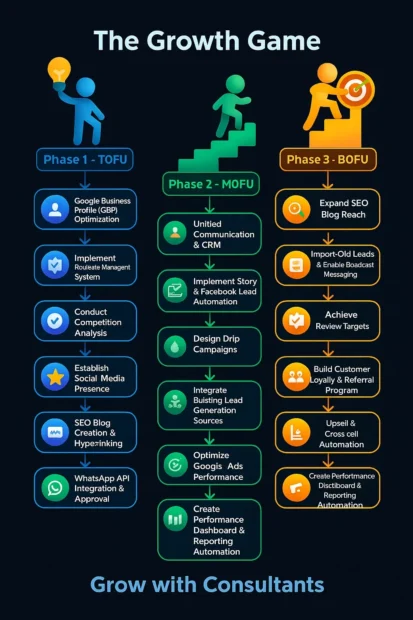
How Grow with consultants will meet all the requirement of Awarness, consideration and conversion with autoamtion.
Conclusion: Turn Attention into Opportunities
Lead generation is not about luck. It’s not about chasing 1000 cold numbers and hoping a few will stick. It’s about building a predictable pipeline by capturing attention, nurturing trust, and ensuring no opportunity is lost.
At Grow With Consultants, we’ve helped entrepreneurs and small businesses do exactly that. Using the right blend of automation, SEO, GMB, social media, and trust signals, we design systems that work — even while you sleep.
If you’ve been watching leads leak out of your funnel, it’s not your fault. You just don’t have the right system yet.
👉 Let’s change that. Book your free consultation today and start turning attention into long-term growth.
FAQs — Small Business Lead Generation
The best strategy is the one that brings qualified buyers, not random inquiries. We focus on right audience targeting, clear offer & messaging, and fast follow-ups. When these align — leads turn into paying customers consistently.
Because they are not the right leads or your sales system is leaking. We fix leaks in lead qualification, objection handling & follow-up automation. Once fixed → more “Yes”, less chasing.
Automation ensures every lead gets an instant response, no inquiry is missed, and nurturing happens every day without human effort. It increases conversions without extra manpower.
Spend only what you can track and convert profitably.
We help you cut waste, focus on high-ROI channels, and grow profit — not just leads.
A lead is someone who shows interest. A qualified lead is someone who wants & can buy soon. We help filter fast — so your sales team talks only to the right people.